



What Is Limescale?
Causes, Removal, and Prevention Guide
What is limescale and how does it form in household appliances?
When water is heated, the bicarbonate ion breaks down into carbon dioxide, water, and a carbonate ion. This causes the solubility of calcium to decrease, causing calcium carbonate to precipitate and settle on surfaces. This process is especially visible on hot surfaces, such as the heating elements of a kettle or a pan. These calcium carbonate deposits are known as limescale or scale.
However, the minerals that cause limescale are beneficial to health and an important part of a balanced diet. Removing these minerals can therefore have undesirable effects on your health.
What problems can limescale cause in appliances such as kettles and showerheads?
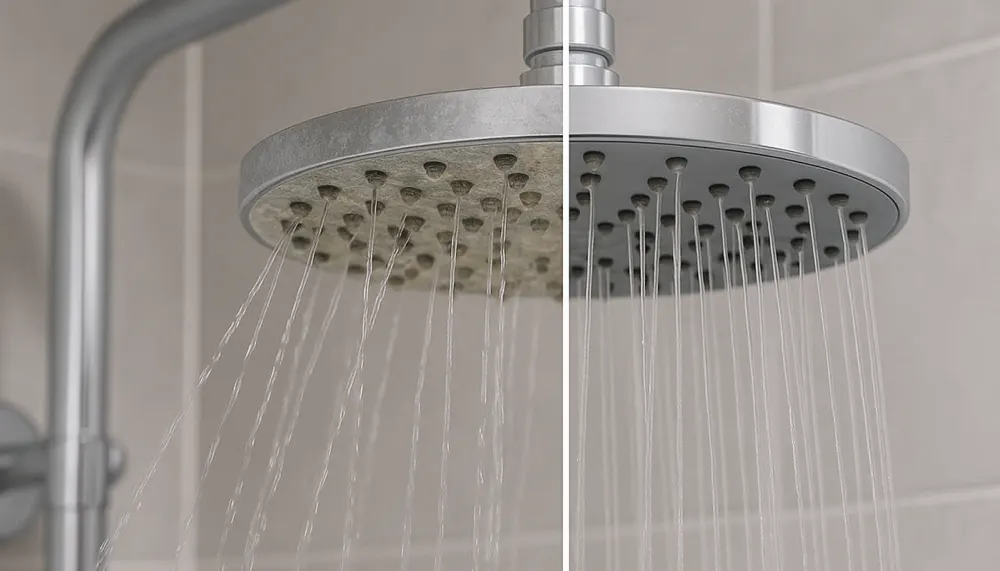
Limescale can lead to reduced efficiency, higher energy consumption, and a shorter lifespan for appliances such as kettles and showerheads. In kettles, it can affect the taste and smell of the water. In showerheads, limescale can reduce water pressure and disrupt spray patterns, resulting in a less pleasant shower experience.
How can limescale be effectively removed from household appliances?
Limescale can be removed using vinegar, citric acid, or special descaling agents. These agents dissolve the limescale, leaving a clean, well-functioning appliance. However, note that special descaling agents are often harmful to the environment. It is therefore recommended to use natural alternatives such as vinegar or citric acid wherever possible.
What are the benefits of regularly descaling appliances?
Regular descaling ensures that appliances run efficiently, save energy, and last longer. The layer of limescale that forms on your appliances’ heating elements acts like an insulating blanket, making the element function less effectively and transferring heat to the water more slowly. This means it takes longer for your appliance to heat the water, resulting in pure energy loss. Descaling also prevents unpleasant odors and bad taste caused by limescale.
How can limescale be prevented in household appliances?
Limescale can be prevented by using an electronic descaler, filter cartridges, or a Ion Exchanger. Using soft water instead of hard water can also help reduce limescale buildup.
Summary: Drinking water in Germany is of excellent quality and is subject to stricter control requirements than bottled water. The minerals that cause limescale are essential nutrients for your health, so it is not desirable to remove them from your drinking water. However, since limescale is unwanted and unhygienic, it’s important to prevent or remove it to ensure a clean and safe living environment.
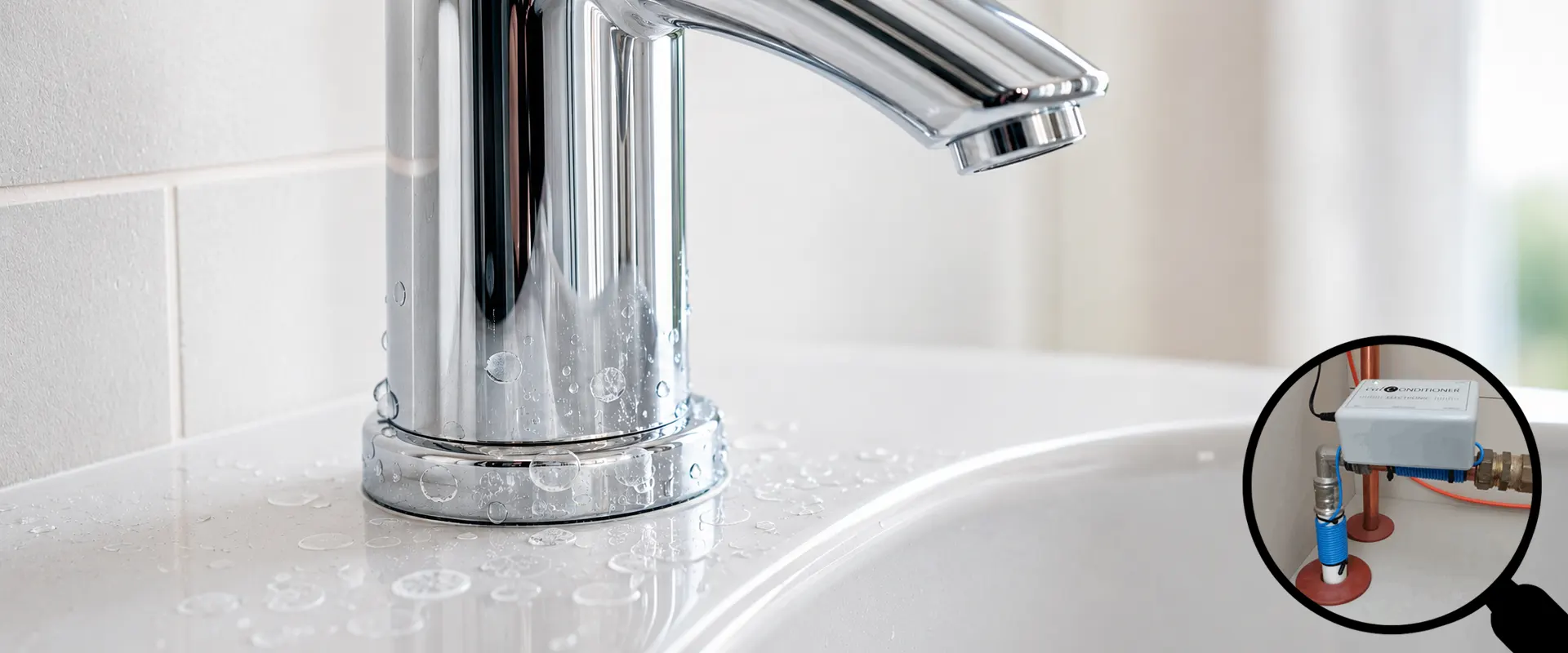
Calconditioner active electro-physical descaler prevents limescale buildup for homes and industry.
Sources: Wikipedia, Federal Environment Agency, kalkaanslag.nl
Frequently Asked Questions about Limescale
What exactly is limescale?
Limescale is a hard, chalky deposit made mainly of calcium carbonate. It forms when hard water is heated or evaporates, leaving minerals behind on surfaces such as kettles, taps and boilers.
Is limescale harmful to my health?
No. Limescale is not harmful to drink, as it consists of natural minerals like calcium and magnesium. In fact, these minerals are an important part of a balanced diet, so removing them from your drinking water is not necessarily desirable from a health perspective. Limescale’s real downside is practical rather than health-related: it can reduce appliance efficiency and increase energy consumption over time.
Why does limescale form faster in hot water appliances?
Heating water reduces the solubility of calcium and magnesium, causing these minerals to crystallise into solid deposits. That’s why kettles, boilers and heating elements are most affected.
What problems can limescale cause in my appliances?
Beyond reduced efficiency and higher energy bills, limescale can affect the taste and smell of water heated in a kettle. In showerheads, it can reduce water pressure and disrupt spray patterns, making for a less pleasant shower experience. Left untreated, it can also shorten the lifespan of affected appliances.
What are the benefits of descaling regularly?
The layer of limescale that builds up on a heating element acts like an insulating blanket, making it less effective at transferring heat to the water. That means appliances take longer to heat up, using more energy in the process. Descaling regularly keeps appliances running efficiently, helps them last longer, and prevents the unpleasant odours and taste that limescale buildup can cause.
How can limescale be removed?
Existing limescale can be removed using mild acids such as vinegar or citric acid. Regular descaling helps, but buildup will return if the water remains hard. Specialised commercial descalers are also available, though these are often less environmentally friendly, so natural alternatives like vinegar or citric acid are generally the better choice where possible.
How can limescale be prevented?
Preventing limescale requires treating hard water before it is heated. This can be done using water softeners, filter cartridges, or electronic descalers that reduce mineral adhesion.