


Practical Tips to Remove Limescale
(and How to Prevent It!)
Proven Ways to Remove Limescale from Your Home
Limescale can make taps dull, kettles slow, and showers less powerful. Before investing in a water treatment system, try these simple, proven methods to remove and prevent limescale. Always read product instructions and check if each tip is suitable for the material you want to clean.
Showerhead Limescale
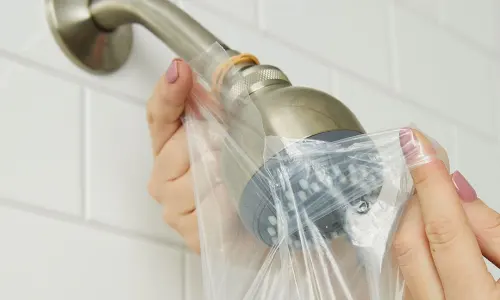
Do you have limescale on your showerhead? The best way to clean it is to unscrew the showerhead and soak it in a bowl of cleaning vinegar for twenty-four hours. If the showerhead cannot be removed, fill a bag with cleaning vinegar and attach it to the showerhead with a rubber band (see picture), so the showerhead is submerged. Leave the showerhead in the cleaning vinegar for twenty-four hours. Want to prevent limescale on your showerhead? read more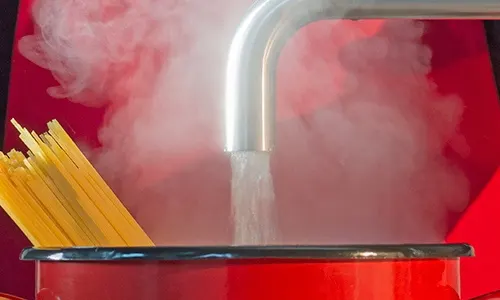
Descale Quooker Taps
Boiling water taps often break down due to limescale. Shortly after purchase, the flow already decreases. Taps with rotary knobs become harder to open and close, and after a few years, the tap needs to be replaced. Unfortunately, this can only be prevented with a water softener or electronic descaler. Is your tap already starting to work less efficiently? It’s not too late; choose an electronic descaler that also breaks down existing limescale in the tap, such as the Calconditioner. read more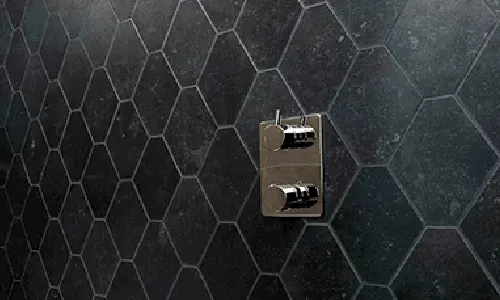
Limescale on Bathroom Tiles
Struggling with limescale on bathroom tiles? Add a capful of fabric softener to half a bucket of warm water and wipe the tiles with this mixture. Do you have stubborn yellow or orange stains from limescale? Let those spots soak for half an hour with a paste of salt and vinegar. If that doesn’t work well enough, spray the tiles with W5 limescale remover from LIDL. Let it sit for a while, then rinse it off. Prefer less scrubbing in your bathroom? read more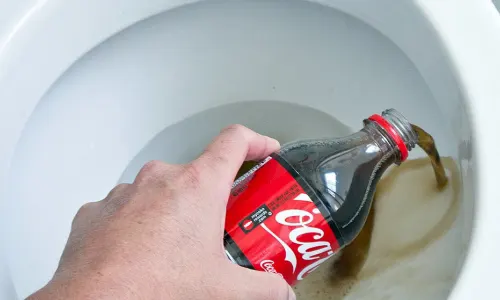
Limescale in Toilet Bowl
The brown stains in a toilet bowl are limescale discolored by feces. Not a pleasant sight and not very hygienic either. Fortunately, it can be easily removed by dropping a Steradent tablet (denture cleaner) or a dishwasher tablet into the bowl in the evening. In the morning, flush the toilet and the limescale will be gone. Flushing with cola also seems to work well. If it’s not completely gone after one treatment, repeat the process until it’s entirely clean. Want to prevent buildup? read more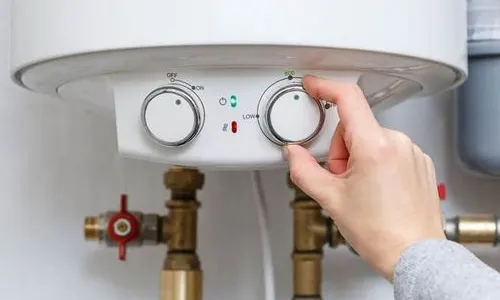
Descale Combi Boiler
Just like in a kettle, limescale builds up in the hot water installation. Imagine how it looks from the inside, like a kettle that hasn’t been descaled in 10 years. This limescale forms an insulating layer on the heating elements, which can increase energy consumption by up to 50%, a significant waste. But how do you descale these appliances? read more
Limescale on Natural Stone
Do you have limescale on the natural stone in your bathroom or kitchen? Never use vinegar, as natural stone often contains calcium, which you don’t want to dissolve. Not sure if your natural stone contains calcium? Drop a bit of vinegar on an inconspicuous spot. If it foams, there is calcium in the natural stone. The best way to remove limescale from calcium-containing natural stone is with HG Natural Stone Cement and Limescale Remover. Of course, it’s better to use a Calconditioner electronic descaler to prevent limescale. Want to know more about natural stone and limescale? read more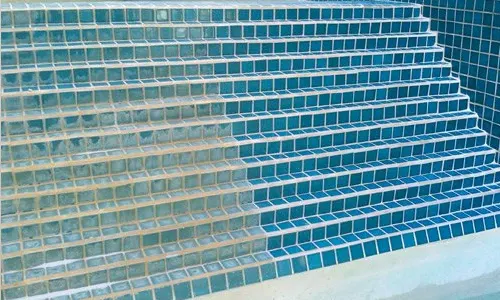
Pool Limescale
Removing limescale from the floor of a pool is a big task. Lay cloths (old towels) on the floor and pour a generous amount of cleaning vinegar over them, about half a liter per square meter. The cloths should be well saturated but not so much that the vinegar runs into the drain. Let it sit for 12 hours. Using a high-pressure cleaner, the floor will be like new again. If not all the limescale is removed, repeat this procedure as many times as necessary until all the buildup is gone. If you want to use an electronic descaler to prevent limescale in your pool, it must be installed in the pump circuit. read more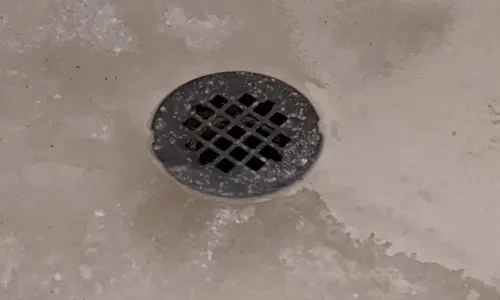
Limescale on Bathroom Floor
Struggling with limescale on the bathroom floor? Lay a cloth on the floor and pour a generous amount of cleaning vinegar over it. The cloth should be well saturated but not so much that the vinegar runs into the drain. After a few hours, rinse and possibly scrub the floor. If not all the limescale is removed, repeat this procedure as many times as necessary until all the buildup is gone. Pink, green, brown, and orange discolorations are often molds, which is another reason to prevent limescale. read more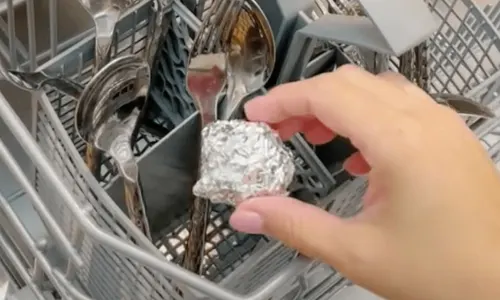
Remove Glass Corrosion
Glass corrosion often occurs in dishwashers and is commonly mistaken for limescale. Soft water helps prevent corrosion, but a ball of aluminum foil in the dishwasher also works excellently. Are your glasses already cloudy? No problem. Keep using and washing them in the dishwasher. After washing, rub the damaged glasses well with a dry tea towel, and you will see that the glass becomes less cloudy after each wash. I don’t know if it works every time and with every type of glass, but I have managed to get all my glasses clear again. Replace the ball of foil every 3 washes to keep it effective. read more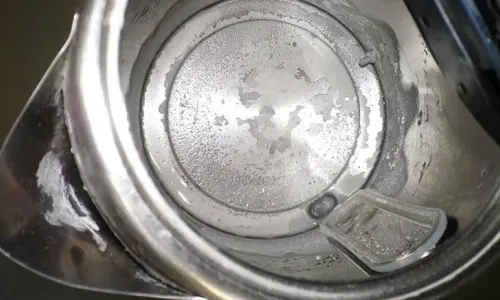
Kettle Limescale
Want to know if you have limescale issues? Check your kettle. Preventing limescale is much less work than removing it, but descaling your kettle is fortunately an easy task. Boil water with a generous amount of vinegar in the kettle, and the limescale will dissolve. If limescale remains, repeat this process until the heating element and kettle are completely clean. You can partially prevent limescale by always emptying the kettle after use. A Calconditioner is, of course, even easier. read more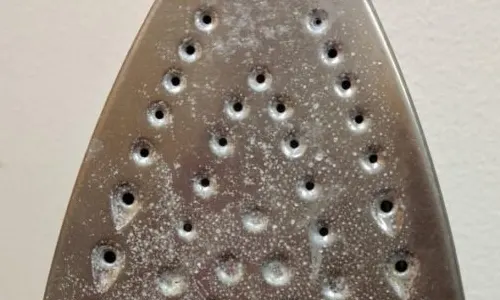
Limescale on Iron
Steam irons expel steam and trap limescale particles from the water. Therefore, use special ironing water (available everywhere), which is mineral-free. If limescale has already built up, fill the iron with a mixture of half water and half vinegar. Heat the iron and use the steam button to clear the holes of limescale. Repeat this procedure until the holes are completely clean, and then rinse several times to remove any vinegar residue. Another option is to prevent limescale buildup. read more
Limescale on Shower Door
Glass shower doors with limescale? Dampen a cloth with vinegar and wipe down the shower door with it. Once the vinegar has dried, wipe it off, and your shower door or shower wall will look like new. Does the frame have chrome edges? Rinse them off and dry them. If the limescale is stubborn, use HG professional limescale remover. Be sure to wear gloves when using it! read moreThese tips for removing limescale are also available in other languages:
- Deutsch: Kalk entfernen – 12 bewährte und kostenlose Tipps
- Español: Eliminar la cal – 12 consejos eficaces y gratuitos
- Français: Enlever le calcaire – 12 conseils efficaces et gratuits
- Italiano: Rimuovere il calcare – 12 consigli efficaci e gratuiti
- Nederlands: Kalkaanslag verwijderen – 12 bewezen en gratis tips
- Português: Remover calcário – 12 dicas eficazes e gratuitas
Frequently Asked Questions about Removing Limescale
What removes limescale the best?
Acids such as white vinegar, lemon juice, or citric acid dissolve limescale naturally. Let the solution sit for a few minutes before wiping and rinsing thoroughly.
Can I use vinegar on all surfaces?
No. Avoid vinegar on natural stone, marble, or surfaces with rubber seals. Always test a small area first and rinse with plenty of water.
How do I remove limescale from a kettle?
Fill the kettle with a mixture of half vinegar and half water, boil once, let it cool, then rinse thoroughly. For electric kettles, check the manufacturer’s instructions first.
Does boiling water cause more limescale?
Yes. Heating hard water causes minerals like calcium to crystallise and attach to metal surfaces. The hotter the water, the faster limescale forms.
How can I prevent limescale permanently?
Devices such as the Calconditioner change how minerals behave so they no longer stick to surfaces – without salt, filters, or maintenance.